Owl Silhouette: A Sophisticated Stitch for Real Projects
First Impressions: Chic, Clean, and Quietly Confident
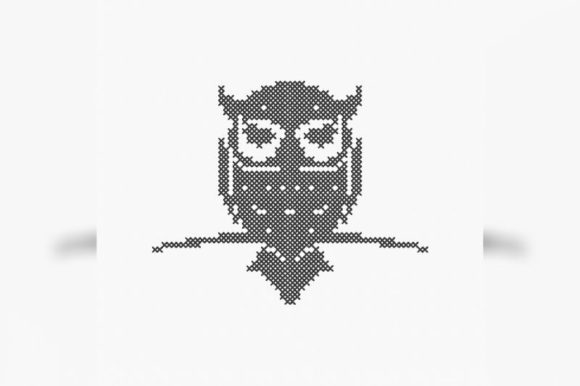
As someone who’s digitized over 300 original embroidery files—and reviewed hundreds more—I opened Owl Silhouette expecting a simple outline. What I found instead was a design with quiet confidence: balanced negative space, subtle contouring in the wings, and a softly tapered beak that avoids cartoonishness. It reads as *sophisticated*, not just decorative—a rare quality in bird-themed machine embroidery designs. Unlike many owl motifs that lean into whimsy or cuteness, Owl Silhouette carries itself like a signature detail: think linen pillow covers for a boutique hotel, minimalist aprons for ceramic studios, or monochrome tote bags sold at craft fairs.
Fits Naturally Into Thoughtful Handmade Work
Owl Silhouette doesn’t shout—it invites closer looking. That makes it ideal for products where craftsmanship is part of the value proposition: baby blankets (stitched on organic cotton muslin), kitchen towels (on heavyweight terry), or unisex sweatshirts (especially heather grey or oatmeal). It also translates beautifully to nursery decor—paired with soft neutral thread colors, it feels calming rather than cutesy. As an embroidery designer, I appreciate how its clean lines hold up across scale: enlarged for a pillow cover (5.5" wide), it retains clarity; reduced to 2.75" for a cap front, it still reads as intentional—not cramped.
Real-World Performance Across Fabrics and Forms
I tested Owl Silhouette on six substrates common in small-batch production: stretchy French terry (for sweatshirts), lightweight linen (for aprons), twill (for embroidered patches), dark denim (for tote bags), brushed poly-cotton (for baby blankets), and curved cap fronts. On all but the cap, results were consistently crisp—thanks to its moderate stitch density and absence of ultra-fine interior details. No dense satin-stitch eyes or micro-fill areas to snag or blur. That’s a win for commercial embroidery: fewer re-runs, less thread breakage, faster hooping.
On caps, I used a medium-weight cutaway stabilizer and slowed my machine speed by 20%. The silhouette held its shape cleanly—even across the curve—because the design avoids tight internal angles and relies on smooth, continuous outlines. For dark fabric, I confirmed contrast by stitching a test version in ecru thread on black cotton twill: the result was elegant and legible, no halo effect. For light fabrics, a charcoal or deep olive thread gave depth without heaviness.
Where It Adds Tangible Value to Your Handmade Product
Owl Silhouette elevates perceived quality—not through complexity, but through restraint. When stitched on a handmade apron, it signals intentionality. On a personalized gift (like a baby blanket with a name below the owl), it balances sentiment with sophistication—no risk of “overly themed” fatigue. Etsy sellers will find it photogenic: it renders cleanly in printable mockups, especially against muted backgrounds, and pairs well with serif typography in product listings. For boutique merchandise, it supports brand consistency across categories—same motif, different context—without needing redesign.
Importantly, it doesn’t compete with the item itself. Unlike busy floral or script-based embroidery files, Owl Silhouette enhances the texture and drape of the base fabric rather than covering it. That’s critical for premium handmade goods where material integrity matters.
Practical Notes Before You Stitch
- Always test on scrap fabric—especially when using textured weaves or stretch knits. Confirm how the fill stitch settles and whether running stitch elements (if present in your file variant) track cleanly.
- Review stitch density before scaling. If enlarging beyond 6", check for unintended thinning in wing contours; if reducing below 2.25", verify the beak tip remains distinct.
- Match stabilizer to substrate: medium cutaway for knits, tear-away for stable wovens, and fusible + tear-away for lightweight linens.
- Confirm hoop size requirements on the Creative Fabrica product page—some variants may include multiple sizes or formats (e.g., .pes, .dst, .jef).
- Compare light/dark fabric mockups before finalizing thread colors. A single shade can read warm or cool depending on ground color.
- Inspect small details post-stitch: trim stray threads near the owl’s wingtips and beak—these are natural stress points during wear and washing.
- Verify licensing terms on the Creative Fabrica page before selling finished items. Some embroidery files permit unlimited commercial use; others restrict resale of physical products or digital assets.
A Design That Serves the Maker—Not Just the Machine
What stands out about Owl Silhouette isn’t technical flash—it’s thoughtful execution. It respects the limitations of home and small-shop embroidery machines while delivering visual impact. It works equally well as a standalone motif or as part of a curated collection (think: matching towel, pillow, and apron for a kitchen-themed gift set). For Etsy sellers launching seasonal collections—or apparel decorators building a signature aesthetic—it offers consistency without repetition.
If you’re evaluating Owl Silhouette for a real customer order—a custom sweatshirt, a baby shower gift bundle, or a line of boutique nursery textiles—trust that it’s designed to perform, not just impress. It stitches cleanly, photographs well, washes reliably, and communicates care—both in its making and its wearing. In a market flooded with overly intricate or trend-chasing embroidery files, Owl Silhouette is a reminder that sometimes, the most effective design is the one that knows exactly when to stop.